"Sweat"
Zora Neale Hurston, 1926
Zora Neale Hurston, 1926
(I apologize; I posted this on time last week, but either my internet connection glitched, or fate decided to give me a rough time. Here's a slightly edited post that should've been here last week.)
"Anything like flowers
has long ago been drowned in the salty stream that had been pressed from her
heart. Her tears, her sweat, her blood. She had brought love to the union and
he had brought a longing after the flesh ... Delia went clear to the rail
without answering him. A triumphant indifference to all that he was or
did."
This short story centers
around Delia, a twentieth-century housewife who's married to a habitual
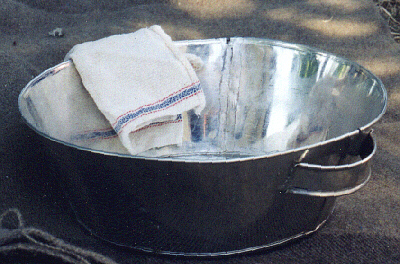
physical and emotional abuser. She's a simple washwoman, but this story
documents her defiance, independence, and ultimate epiphany in regards to her
life with her husband; as well as her future life without him. Delia
is a strong woman in an era where women weren’t expected to be; it is, as a
whole, a story that was far ahead of it’s time.
To begin, it’s best to talk about Delia. As an African
American woman in the 1920’s, she is at a disadvantage before any other
socioeconomic factors come into play. She does the laundry of white families
from another town, and has done an amazing job of taking care of her and her
husband by doing so. This unusual power structure causes distress in her
marriage; the woman is earning the
money for the family, not the man.
And in a time of Jim Crow laws as well as social inequality, this setup was
bound to cause trouble from the beginning.
In regards to this quote, it’s a moment when Delia has an
epiphany about her relationship, which has been struggling for quite some time.
It’s where she finally realizes she’s sacrificed so much and it wasn’t
reciprocated by her husband; she was taken advantage of, and ultimately abused
by a man who probably only wanted her for the fact she had a job. It’s kind of
heartbreaking to realize that it took someone so long to come to his
realization; after years of abuse and mistreatment, it took one argument to finally
push her over the emotional edge.
The fascinating part of this short story is near the end,
where Delia is watching Sykes writhe and struggle in the garden. He was bitten
by the same snake that he’d kept by the door to the house he shared with Delia;
it was there as a warning, a threat to hopefully keep Delia out of the house,
or at least on guard. Sykes did so knowing full well that snakes were one of
Delia’s biggest fears, but in the end it came to literally bite him. The most
impactful aspect of this even was that Delia let the snake loose herself; she
moved the lamps in the house so Sykes couldn’t see the snake coming.
In just about every way, she killed Sykes without actually
touching him.
For Delia, this is a huge event; it’s the climax in regards
to her character arc, and it shows the true strength she has, that she probably
had all along. But it took a push for her to finally act on that strength.

No comments:
Post a Comment